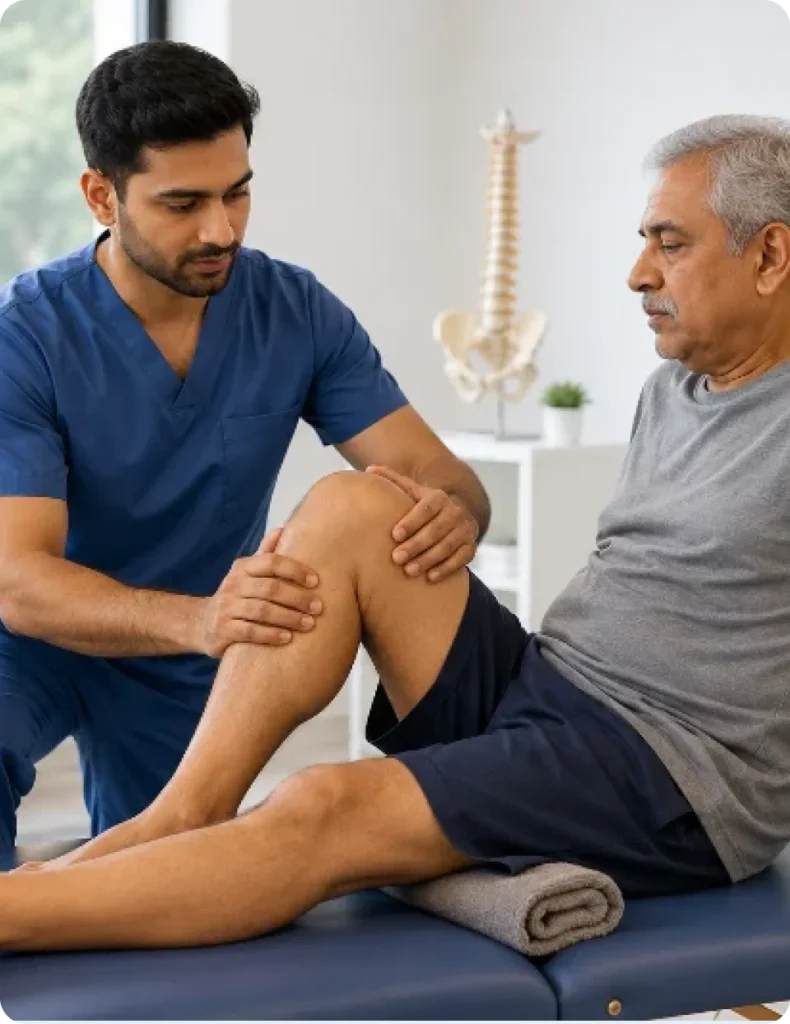
Personalized care for healthier, stronger knees.
There comes a point when knee pain starts affecting more than just your joints. You begin avoiding stairs. Morning walks become shorter. Long drives feel uncomfortable. Standing for extended periods becomes tiring.
Many people assume this is simply a part of ageing. It isn’t. Osteoarthritis is progressive, but with timely care it can be managed effectively — the earlier it is addressed, the more options you have.
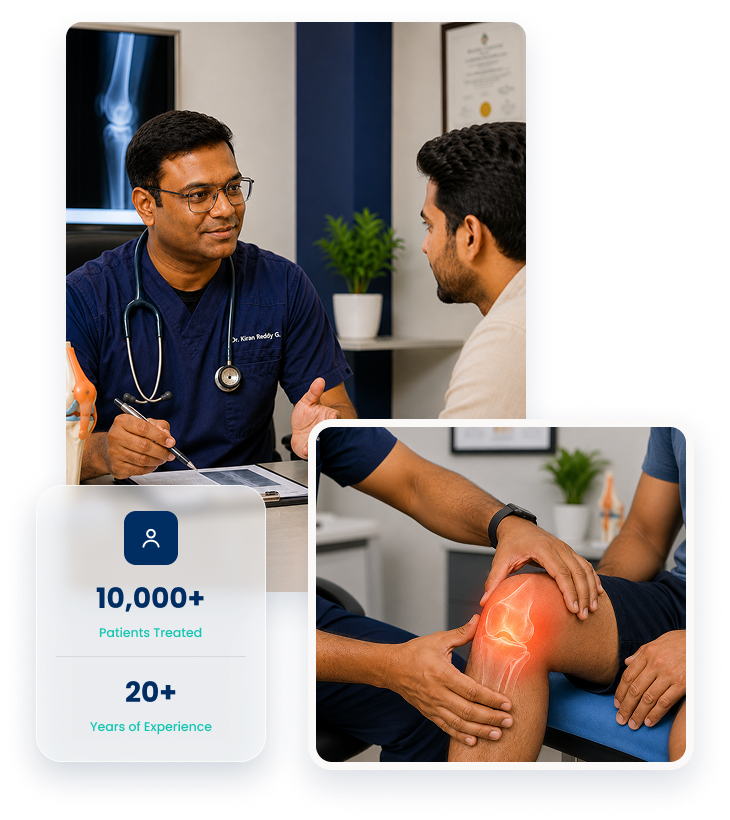
At Kindle Clinics, Dr. Kiran Reddy Chennuri helps patients reduce pain, improve mobility, and preserve their natural joints — not just symptom relief, but moving comfortably and confidently again.
If joint pain is limiting your daily activities, the earlier you seek treatment, the more options you may have to preserve your natural joint and remain active.
Led by Dr. Kiran Reddy Chennuri, MCh Orthopaedics (UK) — specialist in Sports Medicine, Arthroscopy & Joint Preservation
Preserving the natural joint — helping patients delay or avoid knee replacement through evidence-based non-surgical & regenerative options

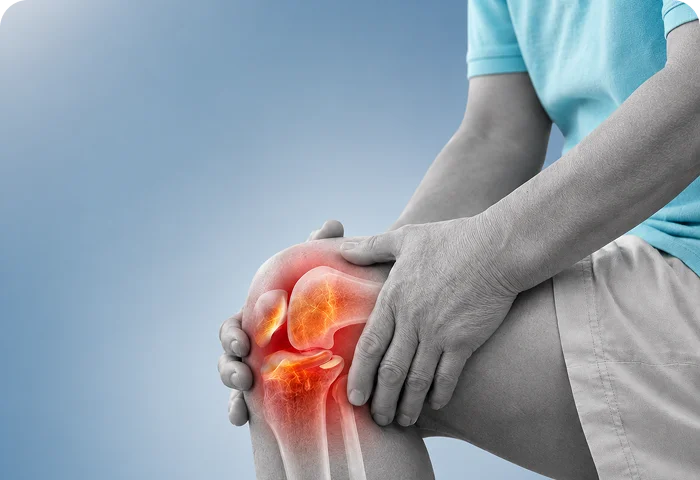
Osteoarthritis is the most common form of arthritis. It develops when the cartilage that cushions the ends of bones gradually wears down.
As this protective layer becomes thinner, the joint loses its smooth movement. Friction increases. Pain, stiffness, swelling, and reduced mobility often follow. The condition usually progresses slowly, which is why early diagnosis and treatment are important.
While osteoarthritis can affect various joints, it is most commonly seen in:
One of the biggest myths surrounding arthritis is that joint replacement is the only solution.
Many patients can successfully manage osteoarthritis through targeted rehabilitation, physiotherapy, muscle strengthening, movement correction, weight management, and lifestyle modifications. The key is identifying the problem early — patients who seek treatment before significant joint damage occurs often experience better outcomes and greater long-term mobility.
At Kindle Clinics, treatment decisions are based on your symptoms, joint health, activity levels, and goals — not on a one-size-fits-all approach.
Especially if they are affecting your routine or independence. An early evaluation gives you more options to stay active.
Many patients have already tried pain medications, home remedies, or short-term treatments before seeking specialist care.
This happens because osteoarthritis is not simply a pain problem. It is a joint function problem. Weak muscles, poor movement patterns, excess pressure on the joints, reduced flexibility, and progressive cartilage wear can all contribute to recurring symptoms.
Treating only the pain may provide short-term relief. Understanding and addressing the underlying causes often leads to more sustainable results.
Several factors can contribute to its development. Understanding them helps create a more effective treatment plan.
Cartilage naturally thins over the years, reducing the joint’s cushioning.
Several factors can contribute to its development. Understanding them helps create a more effective treatment plan.
Cartilage naturally thins over the years, reducing the joint’s cushioning.
That is why effective treatment starts with understanding the severity of joint damage, your symptoms, activity levels, and long-term goals. At Kindle Clinics, Dr. Kiran Reddy Chennuri creates personalised treatment plans to reduce pain, improve mobility, and preserve joint function for as long as possible.
At Kindle Clinics, Dr. Kiran Reddy Chennuri creates personalised treatment plans to reduce pain, improve mobility, and preserve joint function for as long as possible.
Understanding how osteoarthritis affects your joints is an important part of treatment. Simple changes in daily activities, posture, exercise habits, and weight management can significantly reduce stress on affected joints and help slow disease progression.
Physiotherapy remains one of the most effective non-surgical treatments for osteoarthritis. Customised rehabilitation programs focus on:
For many patients, physiotherapy forms the foundation of long-term arthritis management.
When necessary, medications may be recommended to help control pain and inflammation. The goal is not simply to mask symptoms but to help patients remain active while addressing the underlying causes of joint dysfunction.
In some cases, braces, supportive devices, shoe modifications, or walking aids may be recommended to reduce joint strain and improve mobility. These interventions can help patients remain active while protecting affected joints.
For some patients, reducing the load placed on a specific part of the knee can help improve comfort and function. A valgus knee brace may help redistribute pressure away from the affected compartment of the knee. Wedge insoles may also be considered in selected patients to influence how forces pass through the knee during walking. Their suitability depends on the location of arthritis, knee alignment, symptoms, walking pattern, and individual needs.
When knee osteoarthritis continues to cause significant pain despite conservative treatment, cooled genicular nerve radiofrequency ablation may be considered for selected patients. The procedure uses controlled radiofrequency energy to target nerves that carry pain signals from the knee. By reducing these signals, it may help improve pain and make daily movement more comfortable. It does not repair damaged cartilage or reverse osteoarthritis. Its role is primarily to help manage persistent pain and improve function in appropriate patients.
MAC is prepared from the patient’s own bone marrow and contains a mixture of cells and biological factors. In selected patients, it may be considered as part of a joint-preservation treatment plan. The potential role of BMAC in osteoarthritis continues to be studied, so treatment suitability and expected outcomes should be discussed on an individual basis.
Mesenchymal stem cell-based therapies are being studied for their potential role in managing joint conditions and supporting tissue repair. For selected patients, these approaches may be discussed based on the condition of the joint, previous treatments, overall health, and individual treatment goals. These therapies should not be presented as a guaranteed cure or as a treatment that reverses osteoarthritis.
For selected patients, treatments targeting the subchondral bone or using ACP-based injections may be considered as part of a broader joint-preservation strategy. The appropriate approach depends on the pattern of joint damage, imaging findings, symptoms, and previous response to treatment.
Exosomes are small extracellular vesicles involved in cell-to-cell communication and are being studied in regenerative medicine. When clinically appropriate, we may discuss exosome-based treatment after evaluating the patient’s condition and the available evidence for the specific approach.
For patients with persistent symptoms that do not respond adequately to conservative measures, injection therapies may be considered. These may include:
The suitability of these treatments depends on the severity of arthritis and individual patient factors.
If joint preservation treatments no longer provide adequate relief, Dr. Kiran Reddy Chennuri guides patients on appropriate surgical options, including joint replacement when indicated — decided carefully, based on symptoms, imaging, and quality of life.
Many patients seek treatment specifically because they want to delay or avoid joint replacement surgery. Depending on the stage of arthritis, symptoms, and overall joint health, regenerative and orthobiologic treatments may be considered as part of a comprehensive management plan.
Uses growth factors derived from the patient’s own blood to support the body’s natural healing and anti-inflammatory responses. In carefully selected patients, ACP may help reduce pain and improve joint function.
Delivers concentrated growth factors that may help improve the biological environment within the joint and support symptom relief in selected patients.
Involves injecting a lubricating substance into the joint to improve comfort, reduce friction, and support smoother movement in appropriate patients.
The primary goal at Kindle Clinics is to preserve the natural joint whenever possible and help patients remain active without unnecessary surgery.
As a member of the Indian Cartilage Society, Dr. Kiran Reddy Chennuri places strong emphasis on cartilage preservation, joint preservation, and evidence-based interventions designed to protect long-term joint health.
A combination of physiotherapy, strengthening programs, lifestyle modification, weight management, and targeted interventions can often delay progression and improve quality of life.
Many patients are relieved to learn that knee replacement surgery is not the only treatment option. In fact, many individuals can successfully delay or avoid surgery through a combination of physiotherapy, strengthening programmes, weight management, activity modification, regenerative treatments, and joint-preservation strategies.
The earlier osteoarthritis is identified and treated, the greater the opportunity to preserve joint function and maintain an active lifestyle without surgery.
The earlier treatment begins, the greater the opportunity to protect joint health.
Managing osteoarthritis requires more than prescribing medications. It requires understanding how pain affects your daily life, identifying what is accelerating joint damage, and developing a plan that aligns with your goals.
A significant part of Dr. Kiran’s practice involves helping suitable patients manage symptoms successfully through rehabilitation, regenerative therapies, and joint-preservation strategies before surgical intervention becomes necessary.
Every treatment recommendation is made with one objective in mind: helping you move better and live better.
Delaying treatment can allow joint damage to progress further. Early intervention often provides more treatment options and better outcomes.
Living with arthritis does not mean giving up the activities you enjoy. With the right treatment approach, many patients can continue to walk comfortably, remain active, and maintain their independence for years to come.
If joint pain, stiffness, or reduced mobility is affecting your quality of life, consult Dr. Kiran Reddy Chennuri at Kindle Clinics for expert Osteoarthritis Treatment in Hyderabad. Patients can also benefit from individualised rehabilitation programs designed to support long-term joint health and improved mobility.
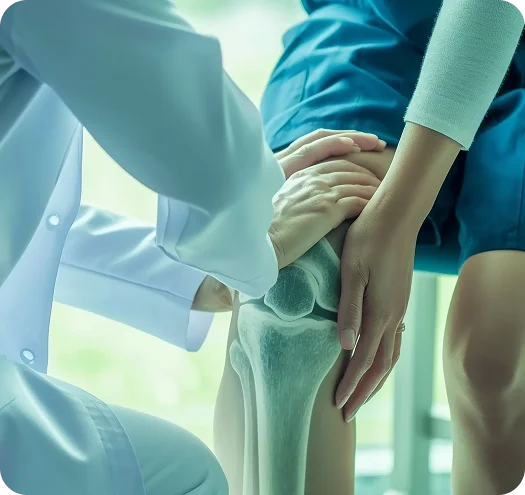
A detailed assessment can help determine whether physiotherapy, regenerative therapy, lifestyle modification, or surgical treatment is the most appropriate next step for your condition.
Share your details and our team will call you back within 24 hours to schedule your consultation.