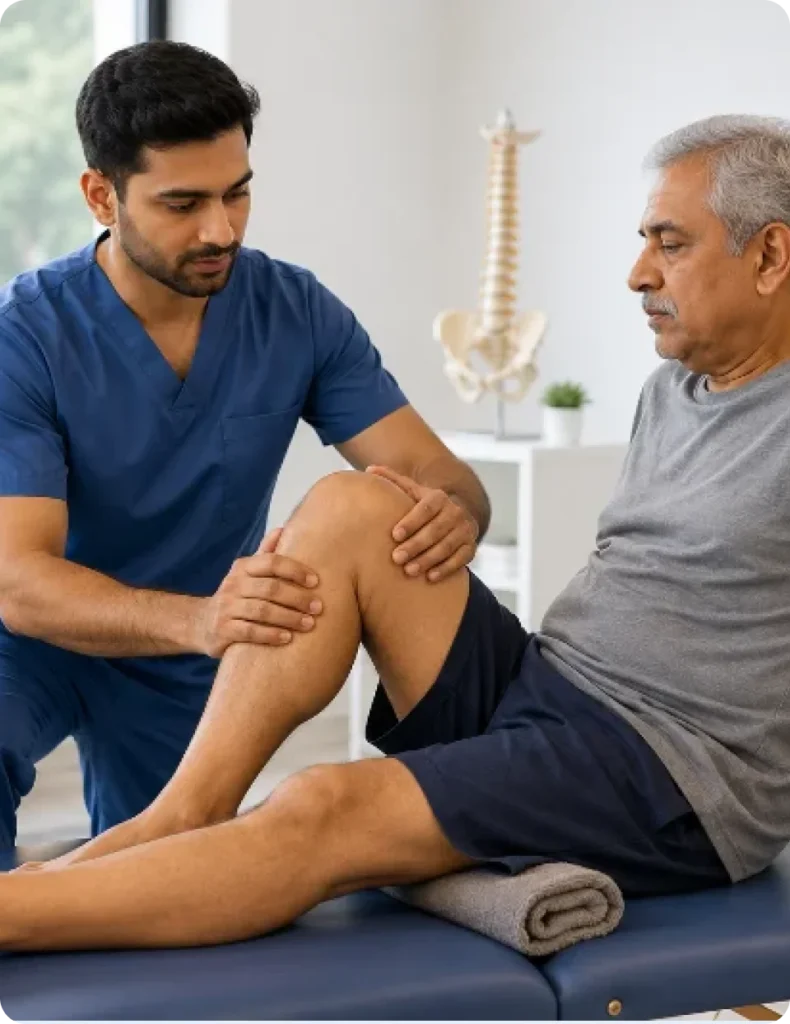
ACL & PCL Reconstruction Surgery in Hyderabad

Personalized care for healthier, stronger knees.

Knee Stability

Ligament Repair

Return to Sports

Long-Term Joint Health

A Knee Ligament Injury Can
Change Everything

One awkward landing. One sudden twist. One sports injury. For many people, that’s all it takes to tear a knee ligament — and what follows is often frustrating.

Your knee feels unstable. You stop trusting it. Sports feel impossible. Running becomes difficult. Even everyday movements can make you feel like the knee might give way.
At Kindle Clinics, Dr. Kiran Reddy Chennuri focuses on restoring knee stability, function, and confidence through personalised treatment plans designed around your injury, activity levels, and long-term goals.

Whether you are a professional athlete, recreational sports enthusiast, or someone simply looking to regain normal movement, early evaluation can make a significant difference in your recovery journey.

Led by Dr. Kiran Reddy Chennuri, MCh Orthopaedics (UK) – specialist in Sports Medicine & Arthroscopic Knee Surgery

Member of the Indian Cartilage Society

Restoring knee stability while preserving long-term joint health – helping patients safely return to sport and active lifestyles

Understanding Knee Ligament Injuries

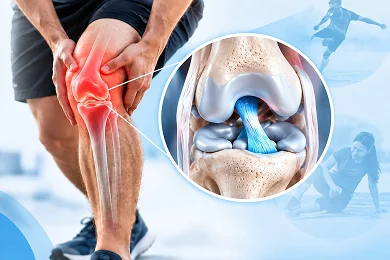
The knee depends on strong ligaments to maintain stability during movement. Two of the most important stabilising ligaments are the Anterior Cruciate Ligament (ACL) and the Posterior Cruciate Ligament (PCL).

These ligaments work together to control knee movement and prevent excessive shifting of the joint.

When either ligament is injured, the knee can become unstable, painful, and vulnerable to further damage.

An ACL or PCL Tear Is More Than a Sports Injury

Many people think ligament injuries only affect athletes.

The reality is different.

Whether you play competitive sports, enjoy weekend fitness activities, or have simply suffered an accidental fall, a torn ligament can affect the stability of your entire knee. When the ACL or PCL is damaged, the knee may no longer move the way it should — and over time, this instability can place additional stress on the meniscus, cartilage, and surrounding joint structures.

At Kindle Clinics, the goal is not simply repairing a torn ligament. The goal is restoring knee stability, protecting long-term joint health, and helping patients return to movement with confidence.

What Is ACL Injury?

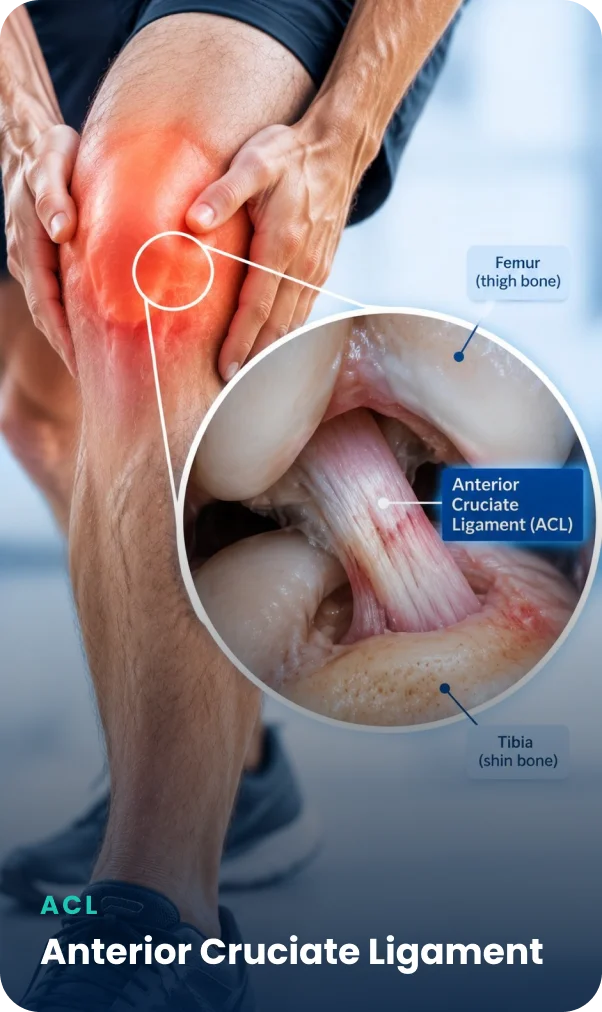
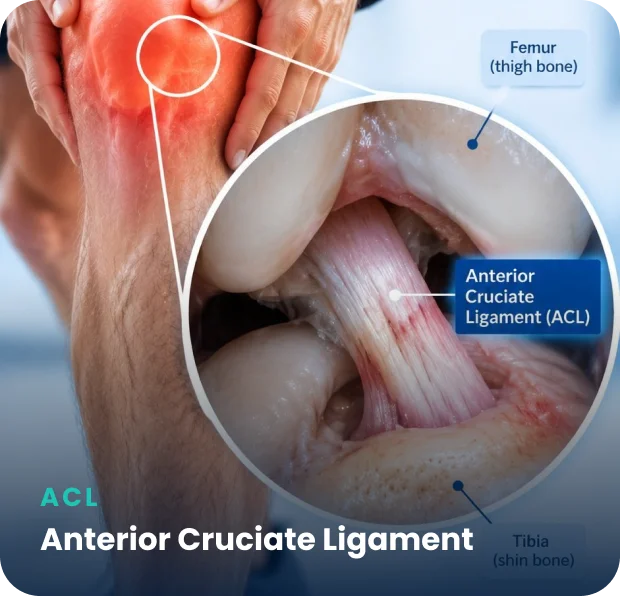
The Anterior Cruciate Ligament (ACL) is one of the primary stabilising ligaments inside the knee. It helps control the forward movement of the shin bone and rotational movements of the knee.

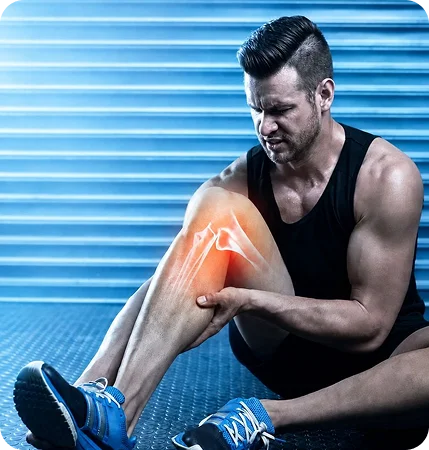
Many patients describe hearing or feeling a “pop” at the time of injury, followed by swelling and a feeling of instability in the knee.

ACL injuries most commonly occur during sports and sudden movements:

Football
Cricket
Basketball
Badminton
Shoulders
Hands
Road Traffic Accidents
Gym Activities
Volleyball
Sudden Twisting Movements
Continuing Sports After an ACL Tear Can Lead to Further Damage

One of the most common mistakes patients make is returning to sports too quickly.

The swelling settles. The pain improves. The knee feels "good enough."

However, the underlying instability often remains. If an ACL tear is ignored, it increases the risk of:

Often, returning to sports without proper assessment leads to major problems.

Common Symptoms of ACL Tear
ACL tear symptoms may include:
Sudden knee pain
A popping sensation during injury
Rapid swelling
Knee instability
Difficulty walking
Feeling that the knee may "give way"
Loss of confidence during sports
Difficulty changing direction while running
Explore more
Walking again doesn't mean the knee has healed

Some patients can walk after the injury. This often creates a false sense of security – and delays the treatment the knee actually needs.

What Is a PCL Injury?

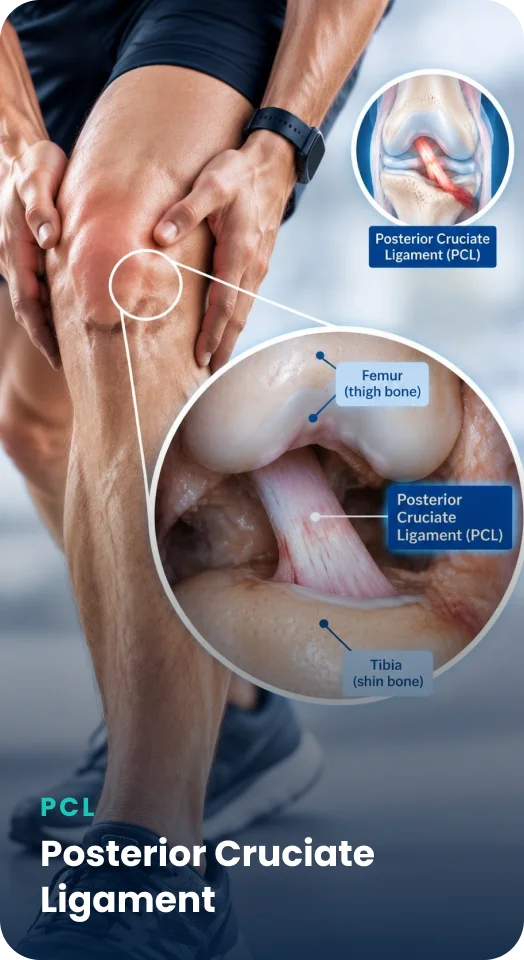
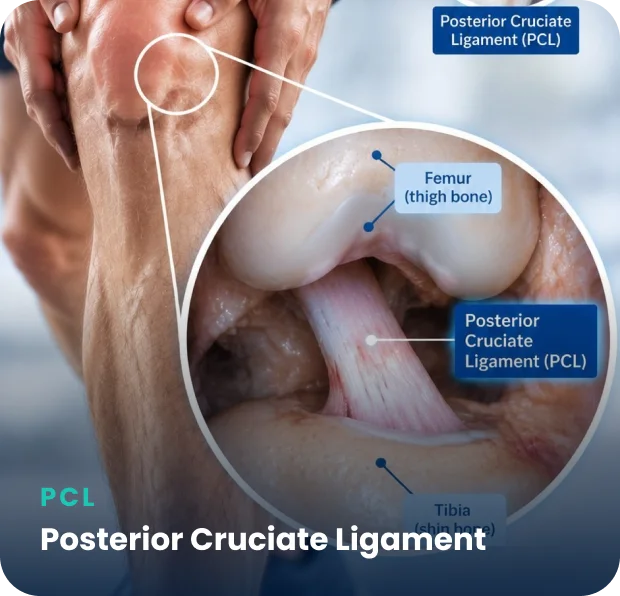
The Posterior Cruciate Ligament (PCL) is located behind the ACL and helps prevent the shin bone from moving excessively backwards. PCL injuries are less common than ACL tears but can significantly affect knee stability. They are often associated with:

Road traffic accidents

Sudden impact forcing the shin bone backwards.

Falls
Slips and awkward landings during daily activity.
Direct impact on the knee
A blow to the front of the knee, common in contact sports.
Dashboard injuries
The knee striking the dashboard during a collision.
Contact sports injuries
Tackles and collisions during play.
Hyperextension injuries
The knee bending too far backwards.
Falling on a bent knee
Direct landing on the flexed knee.
Knee dislocations
Severe injuries affecting multiple structures.
What Is PCL Injury?

The Posterior Cruciate Ligament (PCL) is located behind the ACL and helps prevent the shin bone from moving excessively backwards. PCL injuries are less common than ACL tears but can significantly affect knee stability. They are often associated with:

Road traffic accidents

Sudden impact forcing the shin bone backwards.

Falls
Slips and awkward landings during daily activity.
Direct impact on the knee
A blow to the front of the knee, common in contact sports.
Dashboard injuries
The knee striking the dashboard during a collision.
Contact sports injuries
Tackles and collisions during play.
Hyperextension injuries
The knee bending too far backwards.
Falling on a bent knee
Direct landing on the flexed knee.
Knee dislocations
Severe injuries affecting multiple structures.
Common Symptoms of a PCL Tear

Patients may experience:

Unlike ACL injuries, PCL tears may not always produce dramatic symptoms immediately after injury.

Knee pain
Swelling
Difficulty walking downhill or downstairs
Feeling of instability
Reduced knee strength
Pain during prolonged activity
Difficulty with sports participation
A feeling that the knee shifts backwards during certain activities
Why Early PCL Treatment Matters

PCL injuries are frequently underdiagnosed because symptoms are often less dramatic than ACL tears. However, untreated PCL injuries can gradually alter knee mechanics and lead to long-term joint problems.

Accurate diagnosis is important because persistent instability may continue even when pain appears relatively mild.

Untreated PCL injuries can gradually alter knee mechanics.

Early diagnosis often improves treatment outcomes.

Over Time, This May Lead To:
Understanding ACL and PCL Tear Severity

Not every ligament injury is the same. ACL and PCL injuries are often classified according to their severity.

Grade 1
LIGAMENT INJURY

The ligament is stretched but remains intact. Patients may experience mild pain and swelling, but overall knee stability is usually preserved.

Grade 2
Sockets Instead of Full Tunnels

A partial tear has occurred. The ligament becomes weaker, and some instability may be present during movement.

Grade 3
For Athletes & High-Demand Patients

The ligament is completely torn. Patients often experience significant instability and difficulty participating in sports or physically demanding activities.

Determining the grade of injury helps guide treatment decisions and identify whether rehabilitation alone or surgery is likely to provide the best outcome.

How Are ACL and PCL Injuries Diagnosed?

Accurate diagnosis is the foundation of successful treatment. Dr. Kiran Reddy Chennuri performs a comprehensive evaluation that may include:

X-Ray Imaging

X-rays may be recommended to rule out fractures, assess alignment, and identify associated bony injuries.

MRI Evaluation

MRI scans help visualise ligament tears and identify associated injuries involving cartilage, meniscus, or other structures.

What Should You Do Immediately After a Knee Ligament Injury?

If you suspect an ACL or PCL injury, the actions you take during the first few days can influence recovery.

You Should:

01
Stop sports or strenuous activities immediately
02
Avoid pushing through pain
03
Apply ice to reduce swelling
04
Elevate the affected leg
05
Use support if weight-bearing is difficult
06
Seek specialist evaluation as early as possible
Treatment Options for ACL and PCL Injuries

Not every ligament injury requires surgery.

Treatment depends on:

HEALING WITHOUT SURGERY
Non-Surgical Treatment

Selected patients may benefit from conservative treatment involving:

Non-surgical treatment may be suitable for partial tears or patients with lower physical demands.

Regenerative medicine and biologic therapies may play a role in selected ligament injuries.

In carefully chosen patients with partial ligament tears, ACP (Autologous Conditioned Plasma) and other biologic treatments may be considered as part of a broader treatment strategy aimed at supporting healing and recovery.

Biologic therapies may also be considered in selected post-operative situations to support the healing environment during rehabilitation.

These treatments are not appropriate for every ligament injury. Complete tears with significant instability often require surgical reconstruction rather than biologic treatment alone.

SURGICAL EXCELLENCE
Advanced ACL & PCL Reconstruction Surgery in Hyderabad

When significant instability exists or patients wish to return to sports safely, surgical reconstruction may be recommended.

The goal is not simply repairing the ligament – it is restoring knee stability, protecting
the joint from further damage, and helping patients regain confidence in movement.

At Kindle Clinics, Advanced ACL & PCL Reconstruction Surgery in Hyderabad is carefully planned based on the patient’s anatomy, activity demands, and recovery goals.

Who May Benefit from Ligament Reconstruction Surgery?

Surgery may be recommended for patients who:

Repeated knee instability
Experience repeated episodes of knee instability
Return to sports
Want to return to sports safely
Complete ligament tears
Have complete ligament tears
Meniscus injuries
Have associated meniscus injuries
Failed conservative treatment
Have failed conservative treatment
Demanding lifestyles
Lead physically demanding lifestyles
Personalised care
Every recommendation is tailored to the individual patient.
Modern Reconstruction Techniques
Graft Choice & Modern Reconstruction Techniques

Modern ACL and PCL reconstruction focuses not only on restoring stability but also on minimising surgical morbidity and supporting recovery. Techniques are selected around your anatomy, sporting goals, and injury pattern.

Hamstring Grafts
Lower-Morbidity Graft Choice

Whenever appropriate, Dr. Kiran commonly uses hamstring tendon grafts for ligament reconstruction. Hamstring grafts are associated with lower rates of anterior knee pain and kneeling discomfort compared with some alternative graft choices, helping many patients experience a more comfortable recovery.

01
01
All-Inside ACL and PCL Reconstruction
Sockets Instead of Full Tunnels

Dr. Kiran performs all-inside reconstruction techniques in suitable patients. Unlike traditional methods that require full bone tunnels, all-inside reconstruction uses sockets rather than complete tunnels.

Potential advantages include:

02
02
FiberTape Internal Bracing for Athletes and High-Demand Patients
For Athletes & High-Demand Patients

For athletes and physically demanding individuals, Dr. Kiran may use FiberTape internal bracing to augment ligament reconstruction in selected cases.

FiberTape acts as a secondary load-sharing stabiliser that helps protect the graft while it heals. This additional support may help patients progress through rehabilitation with greater confidence while the reconstructed ligament matures biologically.

The suitability of internal bracing depends on the patient’s activity level, sporting goals, injury pattern, and overall treatment plan.

03
03
Rehabilitation After ACL and PCL Reconstruction

Recovery plans are designed to help patients safely progress through each stage of healing.

Recovery after ACL or PCL reconstruction is a gradual process that occurs over several months. While rehabilitation programmes are individualised, many patients begin early supervised physiotherapy soon after surgery.

Return to routine daily activities often occurs within the first few weeks to months depending on the procedure performed and the patient’s progress. Return to running, pivoting sports, contact sports, and competitive athletics generally requires several months of structured rehabilitation and careful assessment before clearance is provided.

Surgery is only one part of recovery. Structured rehabilitation is necessary after surgery. It plays a critical role in restoring:
Dr. Kiran emphasises milestone-based recovery rather than rushing to meet arbitrary timelines, helping patients return to activity as safely as possible.
Why Choose Dr. Kiran Reddy Chennuri for ACL and PCL Treatment?

Successful ligament treatment requires more than technical expertise. It requires understanding what the injury has taken away from the patient and creating a pathway back to normal life.

Patients trust Dr. Kiran Reddy Chennuri because of:

Comprehensive knee evaluations
Personalised treatment
Evidence-based treatment strategies
Focus on long-term joint preservation
Advanced reconstruction techniques
Structured rehabilitation guidance
Patient-centred care

As a trusted ACL & PCL Specialist in Hyderabad, Dr. Kiran focuses on helping patients regain knee stability while protecting long-term joint health.

Dr. Kiran Reddy Chennuri holds an MCh in Orthopaedics (UK) and has extensive experience in sports injuries, ligament reconstruction, arthroscopic surgery, and joint-preservation techniques.

He remains committed to evidence-based treatment strategies that focus on preserving cartilage, protecting joint health, and reducing the risk of long-term degeneration following ligament injuries.

When Should You Consult an ACL & PCL Specialist?
Consider scheduling an evaluation if you experience:
Knee instability
Repeated episodes of the knee giving way
Persistent swelling
Difficulty returning to sports
Pain after a twisting injury
Reduced confidence during movement
Ongoing symptoms despite physiotherapy
Early treatment often leads to better outcomes – and may help prevent secondary knee damage.
Book a Consultation for Advanced ACL & PCL Reconstruction Surgery in Hyderabad

A ligament injury does not have to define your future. With the right diagnosis, treatment plan, and rehabilitation strategy, many patients successfully return to sports, work, exercise, and daily activities.

If you are experiencing knee instability, pain, or limitations after an injury, consult Dr. Kiran Reddy Chennuri for expert evaluation and treatment.

Patients seeking Advanced ACL & PCL Reconstruction Surgery in Hyderabad and guidance from an experienced ACL & PCL Specialist in Hyderabad can receive personalised care focused on restoring stability, function, and confidence.

To schedule a consultation with Dr. Kiran Reddy Chennuri, call 9000-022-004 or connect with Kindle Clinics via WhatsApp. Early evaluation can help determine whether rehabilitation, regenerative treatment, or Advanced ACL & PCL Reconstruction Surgery in Hyderabad is the most appropriate path toward recovery.
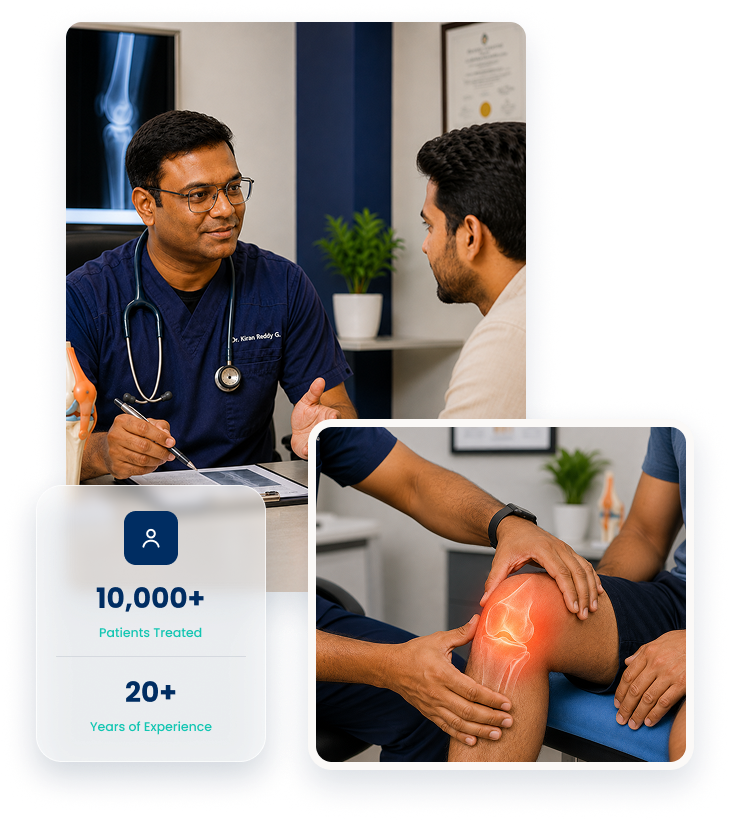

Take the first step back to a stable, confident knee

Share your details and our team will call you back within 24 hours to schedule your consultation.

Prefer to talk now?
Your details stay private - no spam, ever.

Dr. Kiran Reddy Chennuri's Kindle Clinics

Book An Appointment

Dr. Kiran Reddy Chennuri's Kindle Clinics

Contact Us