Regain movement before stiffness takes over your daily life.
It often starts with something small.
You feel pain while reaching for a shelf. Then sleeping on one side becomes uncomfortable. A few weeks later, buttoning a shirt, combing your hair, or fastening a seatbelt starts feeling harder than it should. Most people don’t rush to see a doctor at this stage. They assume they slept in the wrong position. They try pain balms, home remedies, or simply wait for it to improve. But instead of getting better, the shoulder becomes stiffer.
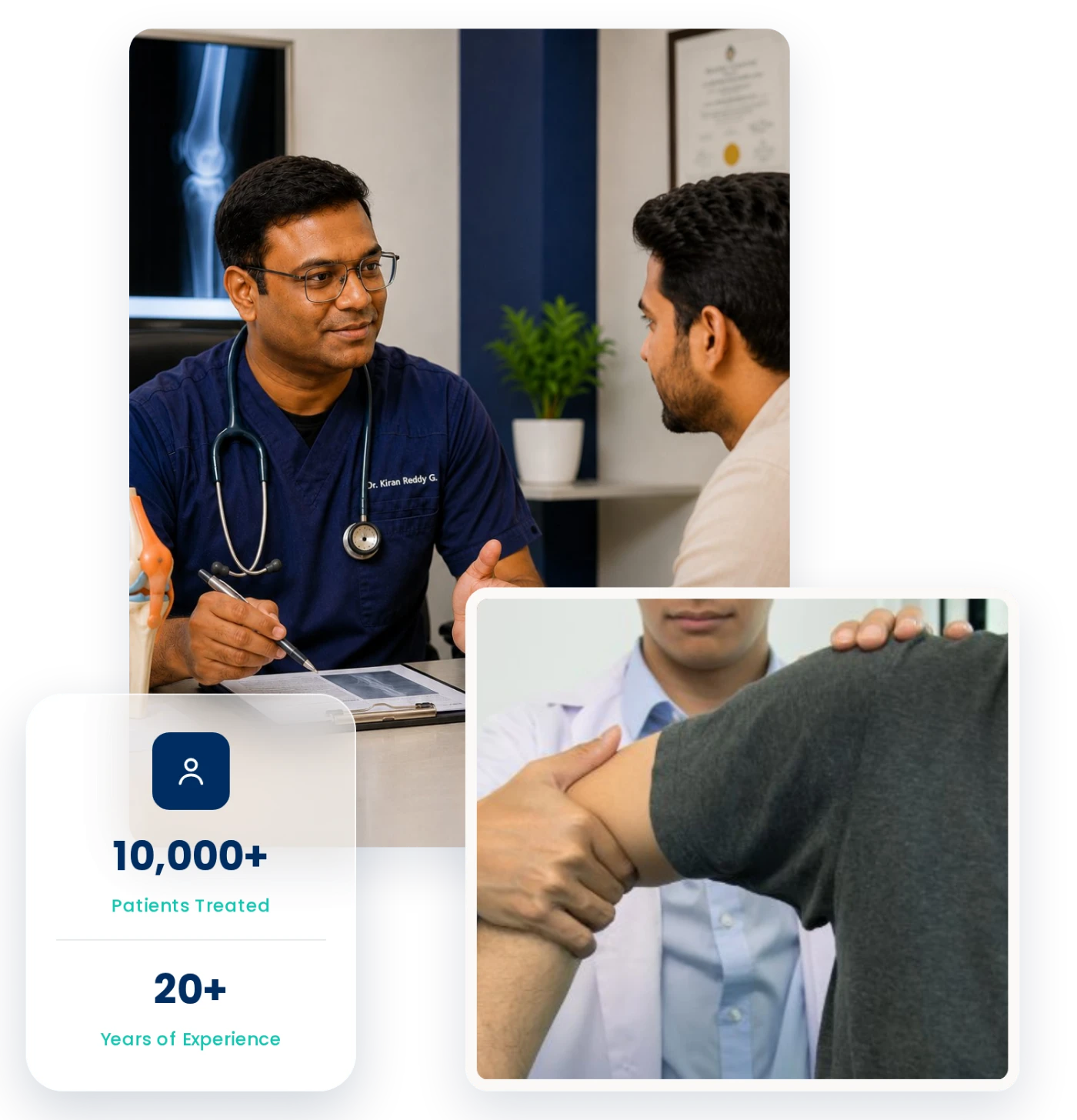
At Kindle Clinics, Dr. Kiran Reddy Chennuri frequently meets patients who have spent months hoping the problem would disappear on its own. By the time they visit, the pain may have reduced slightly, but the shoulder has become so stiff that everyday activities feel frustrating.
If this sounds familiar, you may be dealing with frozen shoulder. Seeking timely Frozen Shoulder Treatment in Hyderabad can help you regain movement before the stiffness starts affecting more parts of your daily life.
Frozen shoulder treatment at Kindle Clinics is led by Dr. Kiran Reddy Chennuri, MCh Orthopaedics (UK), a specialist in Shoulder Surgery, Sports Medicine, and Arthroscopic Procedures
He is a member of the Indian Cartilage Society
His approach focuses on restoring shoulder function while using the least invasive treatment appropriate for each stage of the condition
Frozen shoulder, also known as adhesive capsulitis, is a condition where the capsule surrounding the shoulder joint becomes thick and tight. As this tightening progresses, shoulder movement becomes increasingly restricted.
Unlike a muscle strain that heals within a few weeks, frozen shoulder develops gradually and usually takes time to recover. According to the American Academy of Orthopaedic Surgeons, the condition often progresses through different stages before improvement begins. According to guidance from the American Academy of Orthopaedic Surgeons (AAOS), frozen shoulder typically progresses through distinct stages before recovery occurs.
Many patients are surprised to learn that stiffness is often the biggest problem, not pain. They don’t come to the clinic because the shoulder hurts. They come because the shoulder simply refuses to move normally anymore.
Many patients are surprised to learn that both pain and stiffness can become equally significant problems during frozen shoulder. Some seek treatment because the pain affects sleep and daily comfort, while others are more troubled by the progressive loss of movement. In reality, both symptoms often contribute substantially to the condition’s impact on daily life.
Symptoms usually develop gradually and may include:
Many people notice that their shoulders feel tighter each month, even when the pain seems manageable.
However, frozen shoulder is more commonly seen in people who:
One thing Dr. Kiran often explains to patients is that frozen shoulder is not always linked to a major injury. Some people develop it without any obvious trigger.
That is why a proper evaluation becomes important.
People with diabetes often experience more severe frozen shoulder, may develop the condition in both shoulders, are more prone to recurrence, and may take longer to recover.
Good blood sugar control can play an important role in supporting recovery.
Frozen shoulder usually progresses through three stages.
This is when pain gradually increases. Patients often describe a deep ache that worsens during certain movements and disturbs sleep. As pain increases, shoulder movement starts becoming limited.
The pain may become less intense, but stiffness becomes more noticeable. This is often the stage where patients struggle with daily activities such as dressing, driving, reaching overhead, or lifting objects.
During this stage, shoulder movement slowly begins to improve. Recovery is gradual and may continue for several months. One of the biggest mistakes patients make is assuming recovery should happen in a few weeks. Frozen shoulder typically requires patience and a structured treatment plan.
However, when frozen shoulder is left entirely to resolve on its own without treatment, many patients do not regain their full range of shoulder movement. A residual restriction may remain even after the condition has “thawed,” which is one reason timely treatment can be valuable.
Many patients arrive expecting an immediate injection or surgery recommendation. That is usually not how the consultation begins. Dr. Kiran first tries to understand how the shoulder problem is affecting your life.
Are you unable to work comfortably?
Can you no longer exercise?
Is sleep getting disturbed every night?
Has shoulder stiffness stopped you from performing routine tasks?
Understanding these details helps Dr. Kiran determine not just the diagnosis but also the impact the condition is having on your quality of life.
An important part of the assessment is determining the stage and severity of the condition. Identifying whether the shoulder is in the freezing, frozen, or thawing phase helps guide treatment decisions, rehabilitation strategies, and expectations regarding recovery. A detailed examination follows, during which shoulder movement is carefully assessed.
In some situations, imaging tests such as X-rays or MRI scans may be advised to rule out other shoulder conditions that can produce similar symptoms.
One thing that surprises many patients is that treatment is not the same for everyone. The right approach depends on:
This is why Dr. Kiran focuses on creating a treatment plan that matches the patient’s condition rather than following a one-size-fits-all approach.
The first goal is often to make the shoulder more comfortable. This may involve medications that help reduce pain and inflammation, allowing patients to participate more effectively in rehabilitation.
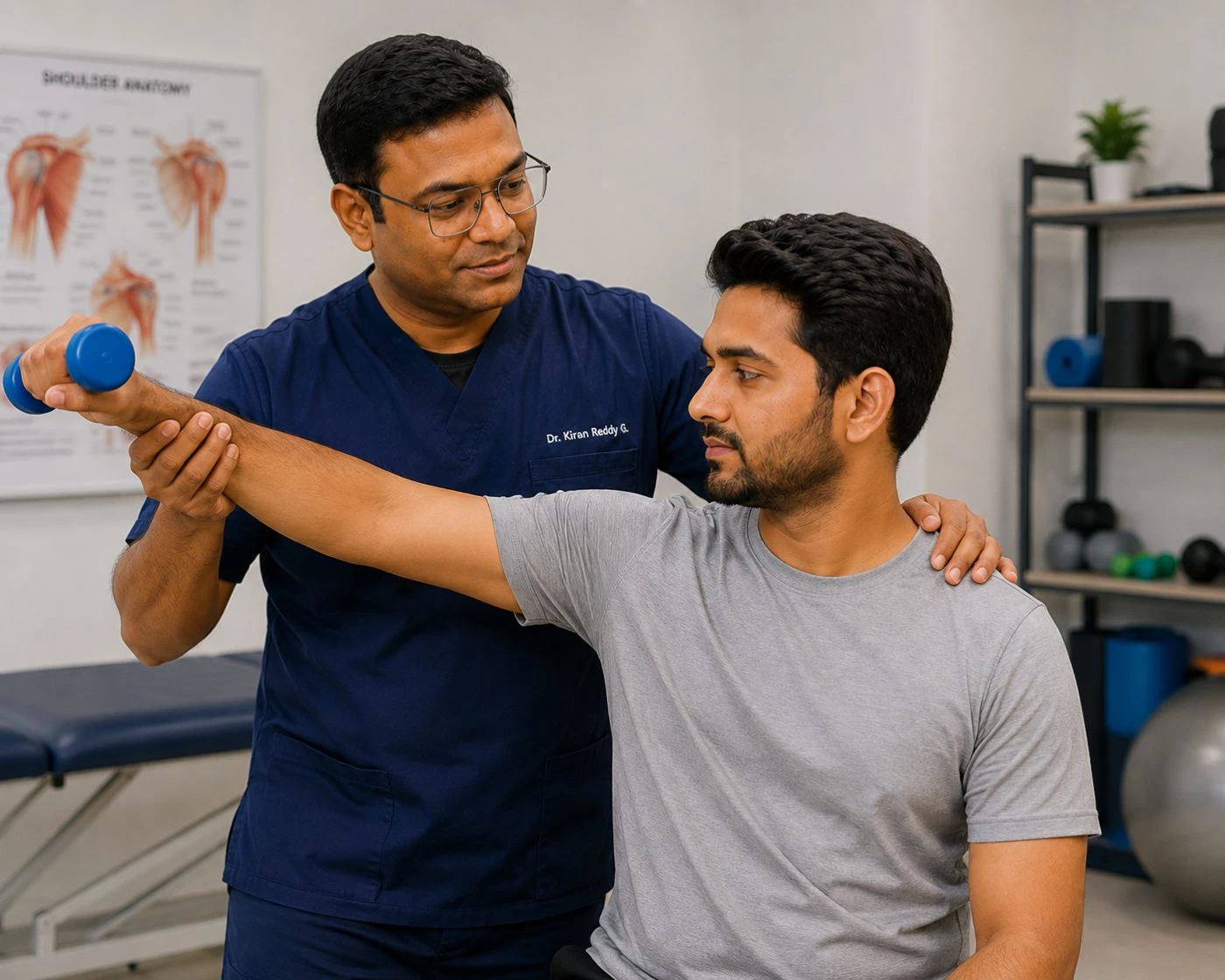
Physiotherapy remains one of the most important parts of treatment. Patients often think they need stronger medicines when the shoulder becomes stiff. In reality, movement plays a crucial role in recovery. The challenge is finding the right balance. Too little movement may worsen stiffness. Too much force can increase pain.
Dr. Kiran works closely with patients to ensure exercises are performed safely and progressively.
For selected patients, injections may be considered to reduce inflammation and improve comfort. These treatments are not necessary for everyone. The decision depends on symptoms, stage of the condition, and response to initial treatment.
For many individuals seeking Frozen Shoulder Treatment in Hyderabad, a combination of pain management and structured rehabilitation provides significant improvement without the need for surgery.
For selected patients, injection-based treatments may be considered to reduce inflammation, improve comfort, and facilitate rehabilitation. Depending on the stage of the condition and clinical findings, treatment options for frozen shoulder treatment in Hyderabad at Kindle Clinics may include:
These treatments are not necessary for everyone. The decision depends on symptoms, stage of the condition, and response to initial treatment.
This is one of the most common questions patients ask.
The good news is that most frozen shoulder cases do not require surgery.
Many patients improve with non-surgical treatment, physiotherapy, and time.
At Kindle Clinics, surgery is never the starting point. It is considered only after carefully evaluating whether less invasive treatments have been exhausted.
When surgery becomes necessary, arthroscopic procedures are commonly performed to release the tight shoulder capsule. These procedures are done using small incisions and specialised instruments.
When surgery becomes necessary, procedures are aimed at releasing the tight and contracted shoulder capsule that restricts movement. Depending on the severity of stiffness and response to previous treatment, options may include:
These procedures are performed using minimally invasive arthroscopic techniques through small incisions whenever appropriate.
Patients considering Frozen Shoulder Surgery in Hyderabad often have concerns about recovery, pain, and long-term outcomes. Dr. Kiran spends time discussing these aspects in detail so patients understand both the benefits and limitations before making a decision.
Recovery does not end in the operating room. Physiotherapy remains an essential part of the process after Frozen Shoulder Surgery in Hyderabad.
Rehabilitation may include:
The goal is to maintain the range of motion gained during surgery and gradually restore normal shoulder function.
Recovery after surgery requires commitment to physiotherapy. Early movement is encouraged to prevent recurrent stiffness and maintain the range of motion achieved during treatment. Many patients begin rehabilitation immediately after surgery and continue structured physiotherapy for several weeks to months depending on the severity of the condition.
Dr. Kiran Reddy Chennuri holds an MCh in Orthopaedics (UK) and has extensive experience in shoulder disorders, arthroscopic surgery, and sports injury management. His expertise allows him to tailor treatment according to the stage of frozen shoulder, helping patients avoid unnecessary procedures whenever possible.
He provides patients access to advanced diagnostic facilities, modern treatment options, and comprehensive rehabilitation support.
Frozen shoulder can be physically exhausting. But for many patients, it is equally frustrating emotionally. When pain affects sleep and stiffness affects independence, even simple tasks can feel overwhelming.
Dr. Kiran understands that patients are not just looking for a diagnosis. They want answers. They want to know whether the problem is serious, whether it will improve, and whether they will be able to return to normal life.
At Kindle Clinics, the focus is on listening first, diagnosing accurately, and recommending the least invasive treatment that can help achieve meaningful recovery.
Whether you are struggling with early shoulder pain or advanced stiffness, seeking expert Frozen Shoulder Treatment in Hyderabad can help you take the first step toward regaining movement and confidence in your shoulder again.

If shoulder pain, stiffness, or restricted movement is affecting your sleep, work, or daily activities, seeking an early evaluation may help prevent further loss of movement and improve recovery outcomes.
At Kindle Clinics, Dr. Kiran Reddy Chennuri carefully assesses the stage and severity of frozen shoulder before recommending a personalised treatment plan. Whether treatment involves physiotherapy, injections, or surgery, the goal is to help you regain comfortable shoulder movement and return to normal activities.
To schedule a consultation, call 9000-022-004 or connect with Kindle Clinics via WhatsApp.
Share your details and our team will call you back within 24 hours to schedule your consultation.