Ankle Arthroscopy Surgery in Hyderabad

Minimally invasive care for persistent ankle pain and instability.

Minimally Invasive

Joint Preservation

Faster Recovery

Return to Activity

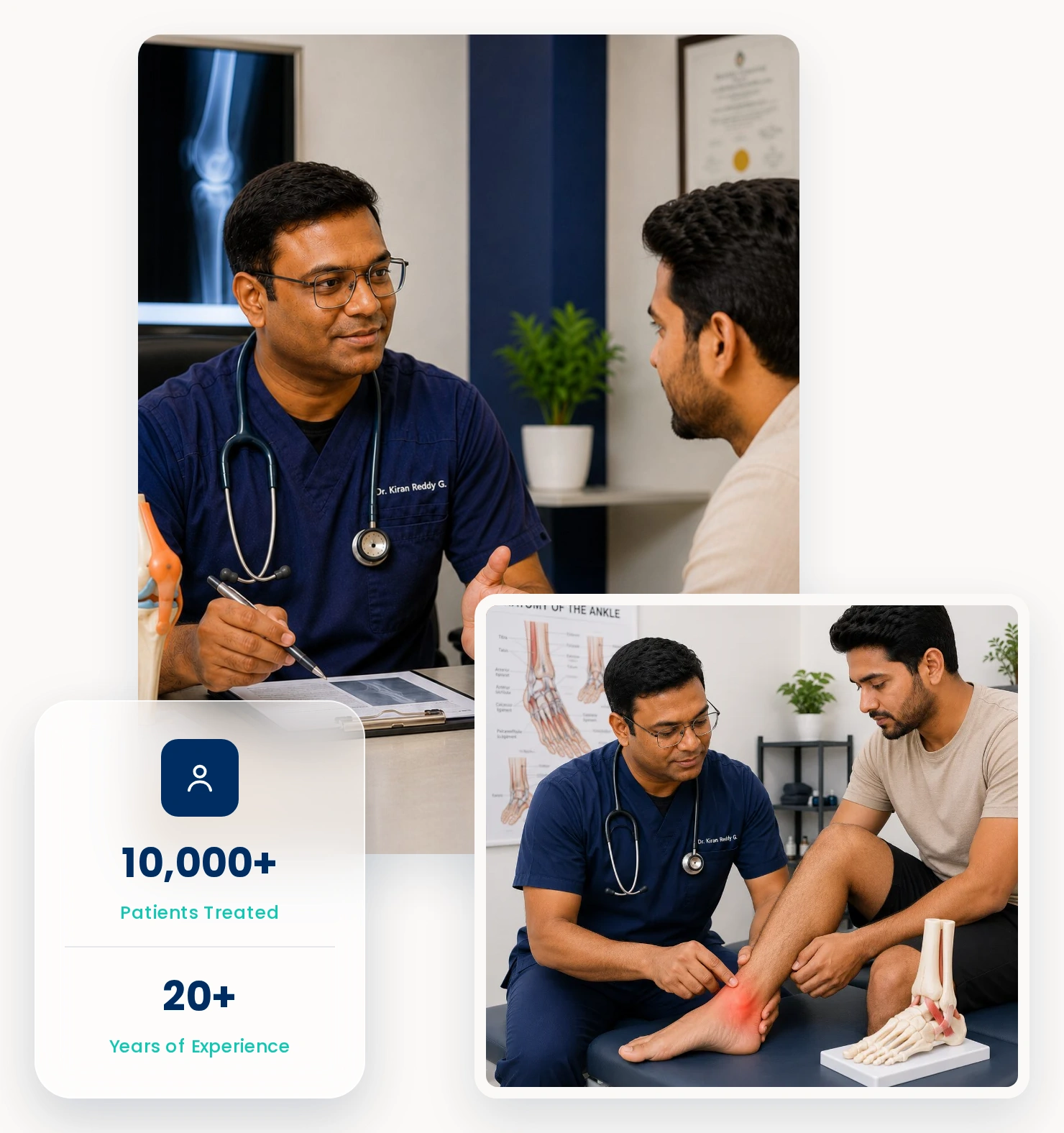
Dr. Kiran Reddy Chennuri talking with a patient, and examining a patient's ankle beside a foot model; 10,000+ patients treated, 20+ years of experience
Kindle Clinics joint care badge

Ankle Pain Has a Way of Interfering With the Simplest Parts of Life

You may notice it while climbing stairs. Walking on uneven ground feels uncomfortable. Sports become difficult. Sometimes the ankle feels stuck, swollen, or unstable even months after an injury.

Many people come to Kindle Clinics after trying rest, medications, braces, or physiotherapy. Some have been told their MRI shows cartilage damage. Others have repeated ankle sprains that never fully healed. If your symptoms persist despite treatment, ankle arthroscopy may be an option.

Under the care of Dr. Kiran Reddy Chennuri, patients receive a thorough evaluation before any decision is made. Surgery is never the starting point. The goal is to understand why the ankle is not recovering and choose the treatment that makes the most sense for that individual.

Ankle arthroscopy procedures at Kindle Clinics are performed by Dr. Kiran Reddy Chennuri, MCh Orthopaedics (UK), a specialist in Sports Medicine and Arthroscopic Surgery

He is a member of the Indian Cartilage Society

His treatment philosophy focuses on joint preservation whenever possible, helping patients return to activity while protecting long-term ankle health

What Is Ankle Arthroscopy?

Ankle Arthroscopy Surgery in Hyderabad is a minimally invasive procedure used to diagnose and treat problems inside the ankle joint.

A minimally invasive procedure is a treatment performed through very small incisions rather than a single large incision. This usually causes less pain, less bleeding, smaller scars, and often helps patients recover faster.

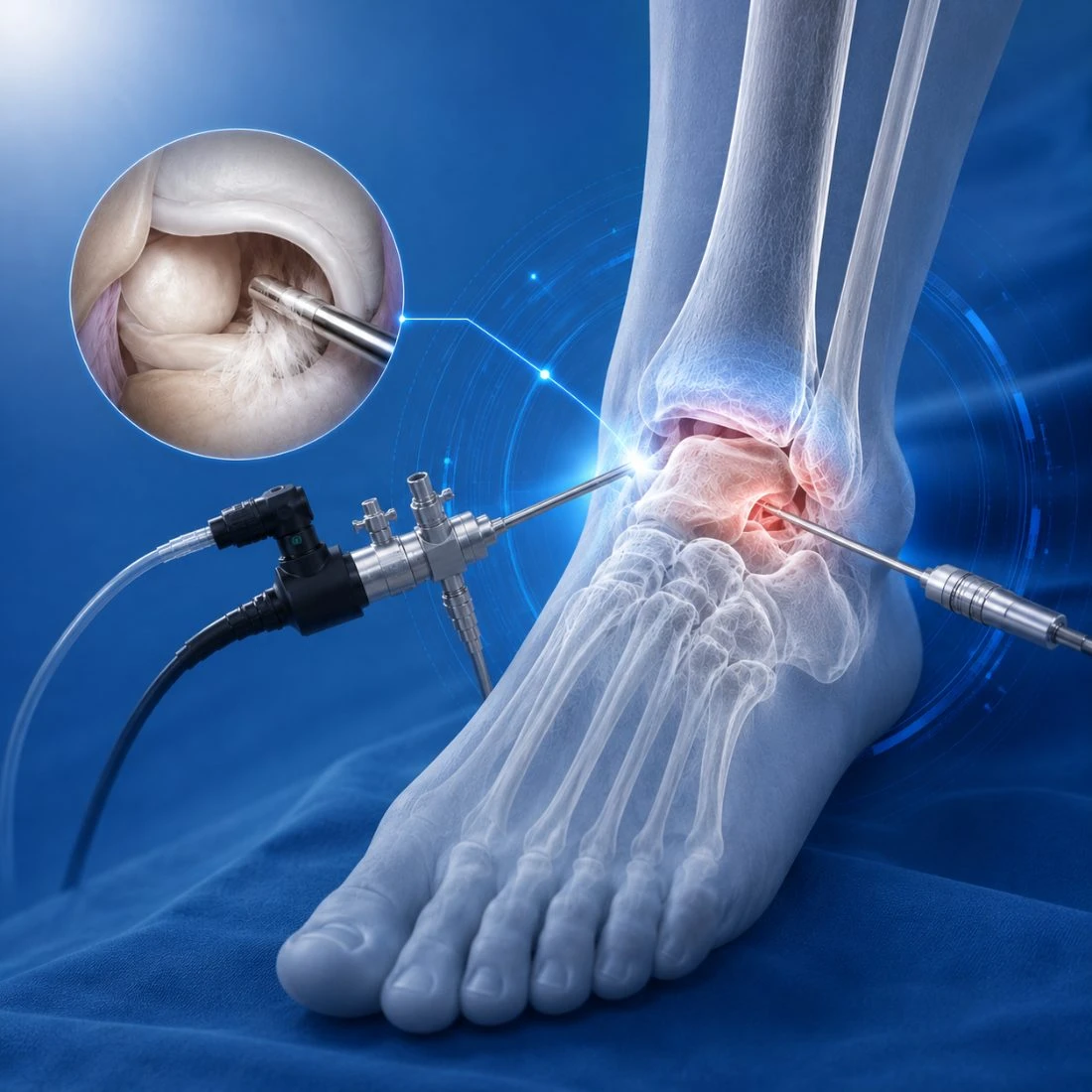
The procedure uses a thin instrument called an arthroscope. It contains a camera and light that allow the surgeon to view the inside of the ankle through small incisions. Special instruments can then be used to repair damaged structures without the need for a large surgical opening.

Because the incisions are small, there is usually less disruption of surrounding tissues than with traditional open surgery.

Illustration of an arthroscope and a surgical instrument entering the ankle joint, with an inset camera view of the inside of the joint

ANKLE ARTHROSCOPY

A Camera and Instruments Through Small Incisions

Ankle arthroscopy may be used to treat:

Cartilage injuries

Loose pieces of bone or cartilage inside the joint

Ankle impingement

Scar tissue inside the joint

Early arthritic changes in selected cases

Common Symptoms That May Need Evaluation

Don’t assume that if you have an ankle injury, surgery is the only way. Look out for persistent symptoms, and then we can decide whether you need surgery. Watch for:

Ongoing ankle pain

Swelling that keeps returning

Clicking, catching, or locking sensations

Stiffness during movement

Difficulty walking long distances

Repeated ankle sprains

Feeling that the ankle may “give way”

Reduced ability to play sports or exercise

If these symptoms continue for weeks or months despite treatment, further evaluation may be needed.

Kindle Clinics joint care badge

What Causes Persistent Ankle Problems?

Several conditions can lead to ongoing ankle pain and dysfunction.

Cartilage Damage

The smooth cartilage inside the ankle joint can become damaged after injury. This may cause pain, swelling, and reduced movement.

The smooth cartilage inside the ankle joint can become damaged after injury. In some patients, this progresses to an osteochondral lesion of the talus (OLT), in which both cartilage and underlying bone are affected. These injuries can cause persistent pain, swelling, stiffness, and difficulty returning to sports or exercise.

At Kindle Clinics, Dr. Kiran Reddy Chennuri follows a joint-preservation approach whenever appropriate. The goal is not simply to relieve symptoms but to preserve healthy cartilage and maintain long-term ankle function. In selected patients, regenerative treatment options such as ACP (Autologous Conditioned Plasma) and other biologic therapies may be considered as part of a comprehensive cartilage-preservation strategy.

Ankle Impingement

Repeated ankle injuries can lead to inflamed tissue or bone growth that gets pinched during movement. Patients often describe pain while squatting, climbing stairs, or running.

Chronic Ankle Instability

Some people continue to experience ankle weakness after repeated sprains. The ligaments may no longer provide enough support to the joint. Learn more about Ankle Ligament Reconstruction

Loose Fragments Inside the Joint

Small pieces of bone or cartilage can move around inside the ankle, causing catching, locking, or sudden pain.

Scar Tissue Formation

After injuries, excess scar tissue can develop inside the joint and restrict normal movement.

When Should You See an Orthopedic Specialist for Ankle Pain?

Many ankle injuries improve with time. However, consult a orthpedic doctor if:

Pain lasts longer than three days

The ankle remains swollen

Walking becomes difficult

Sports activities are limited

The ankle repeatedly twists or gives way

Previous treatment has not helped

MRI reports show cartilage or ligament damage

Ignoring these symptoms may allow the problem to worsen over time.

Doctor kneeling to examine a patient's bare foot and ankle in a clinic

What Happens During Your Consultation with Dr. Kiran Reddy Chennuri?

One thing patients often appreciate at Kindle Clinic is that the first discussion is not about surgery. It starts with understanding the story behind the problem.

Dr. Kiran Reddy Chennuri usually asks:

When did the pain begin?

Was there a specific injury?

What activities make symptoms worse?

Have you had previous ankle sprains?

What treatments have already been tried?

Are sports or work being affected?

Many patients arrive worried that surgery is their only option. Others are concerned about recovery time or whether they will be able to return to sports. These concerns are discussed openly during the consultation.

The examination includes assessment of:

Joint movement

Ligament stability

Areas of tenderness

Walking pattern

Swelling

Strength around the ankle

X-rays and MRI scans may be reviewed when necessary to confirm the diagnosis and identify the source of symptoms. Only after understanding the complete picture does Dr. Kiran discuss the available treatment options.

Treatment Options at Kindle Clinic

Every patient does not need surgery. In fact, many ankle conditions improve with non-surgical treatment. Depending on the diagnosis, treatment may include:

Activity Modification

Reducing activities that aggravate symptoms may allow healing to occur.

Physiotherapy

Targeted rehabilitation can improve ankle strength, stability, balance, and movement.

Bracing and Support

Some patients benefit from ankle supports during recovery.

Medications

Anti-inflammatory medications may help manage pain and swelling when appropriate.

Injections

In selected cases, injections may be considered to reduce inflammation and improve symptoms.

Surgical Treatment

When symptoms persist despite adequate conservative treatment, surgery may be recommended. The decision is based on clinical findings, imaging results, patient goals, and the underlying condition, not solely on MRI reports.

When Is Ankle Arthroscopy Recommended?

Ankle Arthroscopy Surgery in Hyderabad may be considered when:

Conservative treatment has failed

Persistent pain affects daily life

Cartilage lesions are present

Loose bodies are identified

Ankle impingement causes ongoing symptoms

Chronic instability requires surgical correction

Scar tissue is limiting movement

The purpose of surgery is to address the underlying mechanical problem inside the ankle joint rather than simply masking symptoms.

Patients with osteochondral lesions of the talus (OLT) or focal cartilage injuries that have not improved with conservative treatment may also benefit from arthroscopic cartilage procedures designed to preserve joint function and reduce ongoing symptoms.

What Happens During the Procedure?

During ankle arthroscopy, small incisions are made around the ankle. The arthroscope is inserted into the joint, allowing the surgeon to see internal structures on a monitor. Additional instruments are introduced through separate small incisions to perform the required treatment.

Depending on the condition, the procedure may involve:

Removing loose fragments

Trimming damaged tissue

Treating cartilage injuries

Removing scar tissue

Addressing impingement

Repairing selected ligament problems

Most procedures are performed using minimally invasive techniques.

Depending on the condition being treated, ankle arthroscopy may involve advanced arthroscopic techniques such as:

  • Microfracture or marrow stimulation procedures for osteochondral lesions of the talus (OLT)
  • Cartilage-preservation procedures for focal cartilage defects
  • Arthroscopic impingement debridement to remove inflamed tissue or bone causing painful pinching
  • Removal of loose bodies from the ankle joint
  • Scar tissue removal to improve joint movement
  • Arthroscopic-assisted ligament repair or reconstruction in selected cases

The exact technique depends on the underlying diagnosis, imaging findings, activity goals, and the condition of the ankle joint.

Recovery After Ankle Arthroscopy

Recovery varies depending on the condition treated and the extent of the procedure. Most patients can go home the same day.

During recovery, you may need:

Temporary use of crutches

Elevation of the ankle

Ice application to control swelling

Physiotherapy

Gradual return to walking and exercise

Some patients return to routine activities within a few weeks, while athletes and individuals undergoing more complex procedures may require longer rehabilitation.

Although recovery varies from patient to patient, many individuals resume routine daily activities within 2 to 6 weeks. Returning to running, sports, and other high-impact activities may take several months, depending on the procedure performed, tissue healing, and rehabilitation progress. Athletes undergoing cartilage procedures or ligament reconstruction typically require a longer recovery period before returning to competitive sports.

Dr. Kiran Reddy Chennuri provides detailed guidance regarding activity progression based on each patient’s procedure and recovery goals.


Patient in a wheelchair stretching the ankle with a blue resistance band during rehabilitation after ankle arthroscopy

Understanding Ankle Arthroscopy Surgery Cost in Hyderabad

One of the most common questions patients ask is about the Ankle Arthroscopy Surgery Cost in Hyderabad. The final cost depends on several factors:

Nature of the ankle condition

Complexity of the procedure

Hospital charges

Implants or additional procedures if required

Insurance coverage

Because every case is different, an accurate estimate can only be provided after clinical evaluation. If you would like to understand the expected Ankle Arthroscopy Surgery Cost in Hyderabad, a consultation at Kindle Clinic can help clarify the likely treatment plan and associated expenses.

The cost of ankle arthroscopy varies based on the complexity of the procedure, whether cartilage restoration or ligament reconstruction is required, hospital facilities, implants, and insurance coverage. Following a detailed clinical assessment, Dr. Kiran Reddy Chennuri can provide a personalised treatment plan along with a clearer estimate of the expected costs.

Dr. Kiran Reddy Chennuri, MCh Orthopaedics (UK), shoulder and sports medicine surgeon at Kindle Clinics

Dr. Kiran Reddy Chennuri

MCh Orthopaedics (UK) • Sports Medicine & Arthroscopic Surgery

Why Patients Choose Dr. Kiran Reddy Chennuri

Patients rarely remember every medical term discussed during a consultation. They do remember whether they felt heard.

Many patients who visit Kindle Clinic are looking for clear answers. They want to know what is causing their pain, whether surgery is necessary, and what recovery will realistically look like.

Dr. Kiran Reddy Chennuri is known for taking a measured approach to treatment decisions. Surgery is recommended when it is likely to provide meaningful benefit, not simply because imaging shows an abnormality.

Dr Kiran Reddy Chennuri holds an MCh in Orthopaedics (UK) and has extensive experience in arthroscopic and sports-injury surgery. As a member of the Indian Cartilage Society, he has a strong interest in cartilage and joint preservation techniques, as well as biologic treatment options that may help delay or avoid more invasive procedures when appropriate.

This practical, evidence-based approach helps patients make informed decisions with confidence.

Book a Consultation

If ankle pain, instability, swelling, or repeated injuries are limiting your daily activities, it may be time for a specialist evaluation. At Kindle Clinic, Dr. Kiran Reddy Chennuri carefully assesses the cause of your symptoms and explains all available treatment options before discussing surgery.

Whether you need rehabilitation, further investigation, or Ankle Arthroscopy Surgery in Hyderabad, the goal is simple: help you return to comfortable movement with the treatment that is right for you.

To schedule a consultation with Dr. Kiran Reddy Chennuri, call 9000-022-004 or connect with Kindle Clinics via WhatsApp. During your visit, you will receive a detailed assessment of your condition along with a personalised treatment plan tailored to your symptoms, activity goals, and recovery expectations.

Take the first step back to comfortable movement

Share your details and our team will call you back within 24 hours to schedule your consultation.

Prefer to talk now?

Your details stay private — no spam, ever.

Dr. Kiran Reddy Chennuri's Kindle Clinics

Book An Appointment

Dr. Kiran Reddy Chennuri's Kindle Clinics

Contact Us