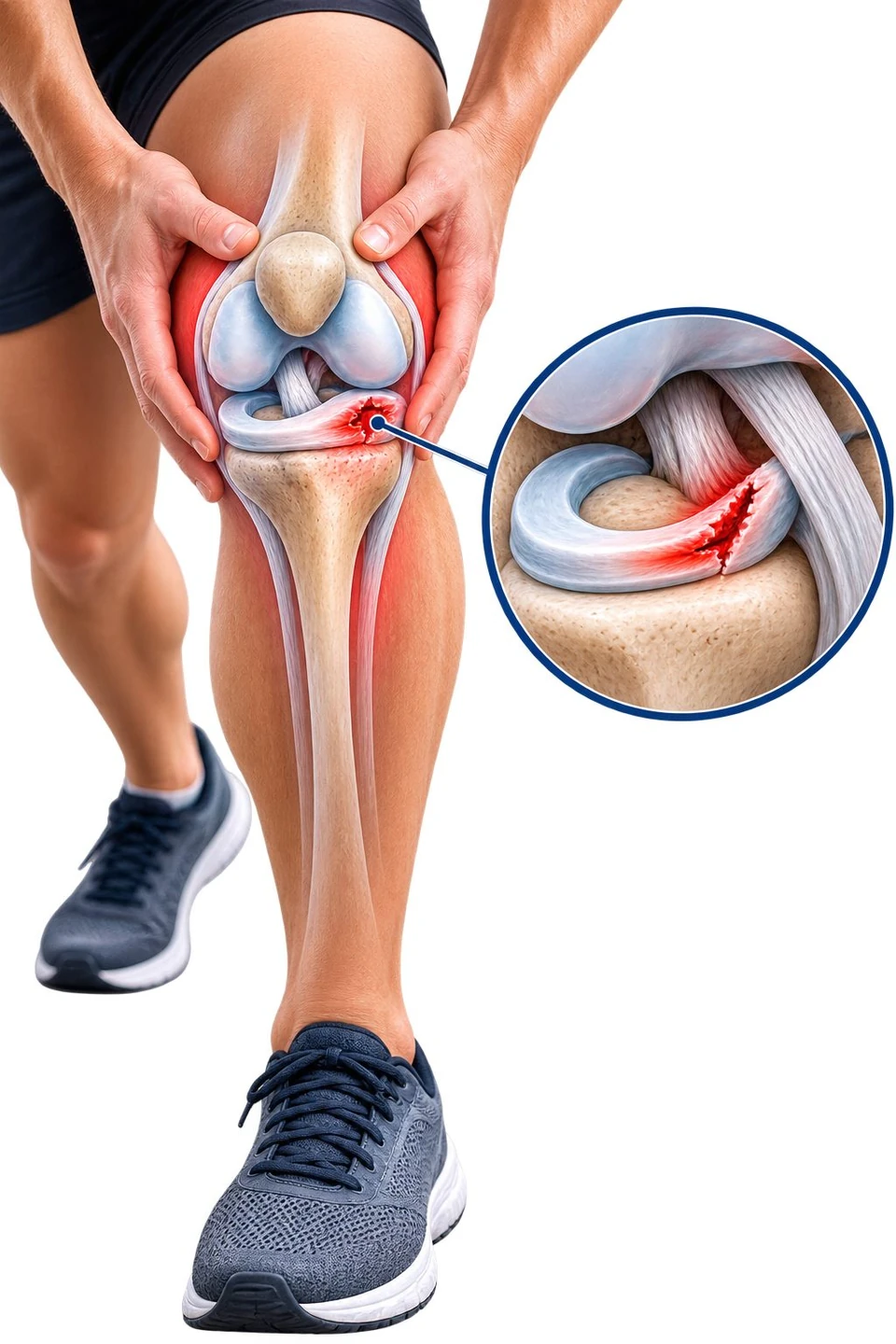
Illustration of a knee joint, with a close-up of a torn meniscus being stitched by an arthroscopic instrument

Meniscus Repair Surgery in Hyderabad

Preserving the knee’s natural cushioning and restoring stability.

Meniscus Preservation

Arthroscopic Repair

Return to Sports

Long-Term Joint Health

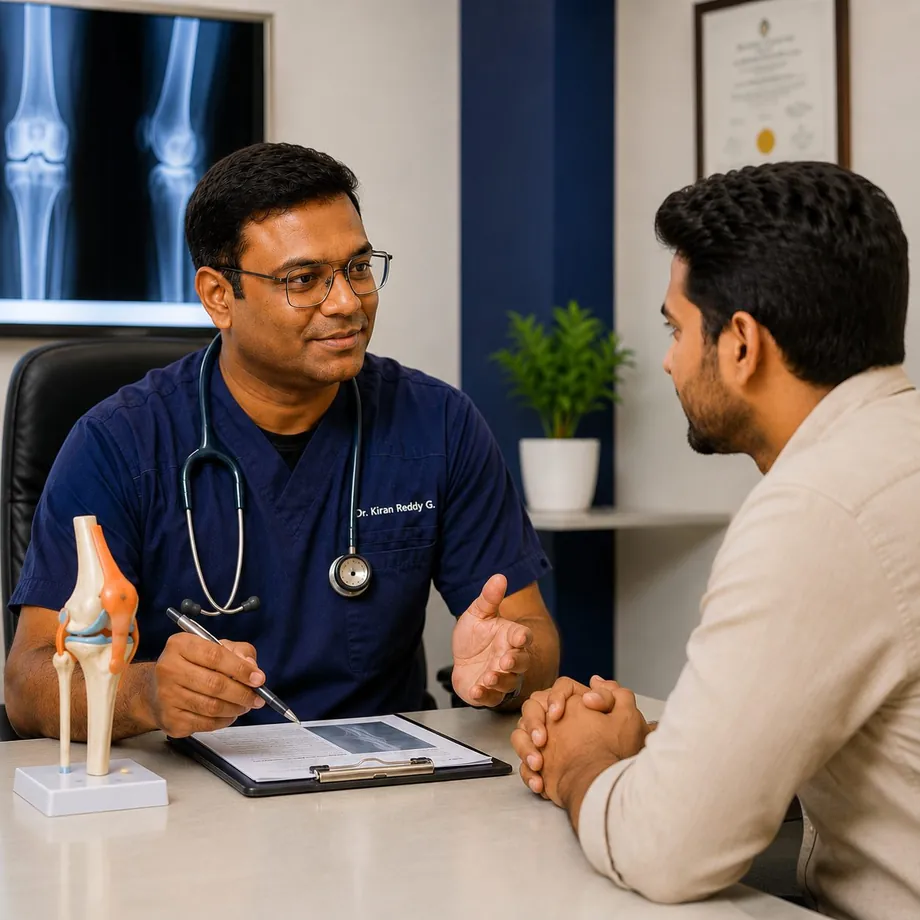
Dr. Kiran with patient
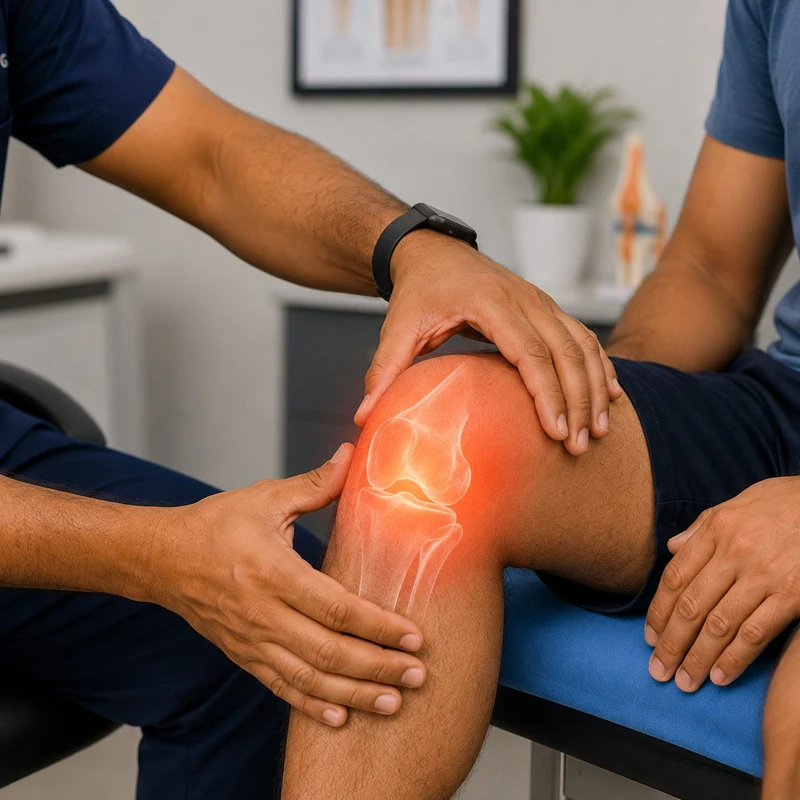
Doctor examining a patient's knee, with the painful area of the knee joint highlighted

10,000+

Patients Treated

20+

Years of Experience

Kindle Clinics joint care badge

10,000+

Patients Treated

20+

Years of Experience

Knee Pain After Twisting Your Knee?
It Could Be a Meniscal Tear

Have you ever twisted your knee while playing sports, climbing stairs, getting up from a squat, or simply turning suddenly?

You may have felt a sharp pain, heard a popping sound, or noticed swelling soon after. For many people, these symptoms are caused by a torn meniscus.

A meniscus tear is one of the most common knee injuries seen by Dr. Kiran Reddy Chennuri. Whether it affects a young athlete, a working professional, or an older adult, the injury can make everyday activities uncomfortable and frustrating.

Many patients worry that a meniscal tear automatically means surgery. However, that is not always true. Dr. Kiran carefully evaluates every patient and recommends treatment based on the type of tear, the severity of symptoms, age, activity level, and long-term knee health goals.

When surgery is required, advanced arthroscopic Meniscus Repair Surgery in Hyderabad can help preserve the knee’s natural cushioning and restore stability.

Meniscal injuries at Kindle Clinics are treated by Dr. Kiran Reddy Chennuri, MCh Orthopaedics (UK), a specialist in Sports Medicine and Arthroscopic Knee Surgery

He is a member of the Indian Cartilage Society

His treatment philosophy focuses on preserving the knee’s natural anatomy whenever possible, helping patients maintain long-term joint health and return safely to their desired activities

What is a Meniscus?

The knee joint is formed where the thigh bone meets the shin bone. Between these bones sits a rubbery cushion called the meniscus. Each knee has two menisci.

Without a healthy meniscus, the knee experiences greater stress during everyday movements.

This is one reason why Dr. Kiran Reddy Chennuri focuses on preserving the meniscus whenever possible rather than removing it.

Think of them as shock absorbers for your knee. They help:

Cushion the joint during walking and running

Distribute body weight evenly

Improve knee stability

Protect the cartilage covering the bones

Reduce wear and tear inside the joint

What Is a Meniscal Tear?

A meniscal tear occurs when this protective cartilage gets damaged. The tear may happen suddenly during sports or develop gradually over time due to age-related changes.

Common types of tears include:

#1

Longitudinal tears

#2

Bucket handle tears

#3

Radial tears

#4

Flap tears

#5

Degenerative tears

Not every tear behaves the same way. Some can heal with conservative treatment, while others may require surgery.

This is why an accurate diagnosis is important before deciding on the best Meniscal Tear Treatment in Hyderabad.

Symptoms of a Meniscal Tear

Many patients assume they have only “sprained” their knee and delay treatment. A torn meniscus can cause:

Knee pain

Swelling

Difficulty bending or straightening the knee

Clicking or catching sensations

Knee locking

Feeling that the knee may give way

Pain while squatting

Difficulty climbing stairs

Reduced ability to participate in sports

Symptoms often worsen over time

Some people continue walking despite the injury, but symptoms often worsen over time. If your knee repeatedly locks or feels unstable, it is important to seek expert evaluation.

What Causes Meniscal Tears?

Meniscal tears can affect people of all ages.

Sports Injuries

Football, cricket, badminton, basketball, and other sports often involve sudden twisting movements that place stress on the meniscus.

Sudden Knee Twisting

Even a simple twist while getting up from a chair or stepping off a curb can tear the meniscus.

Illustration of a knee held in both hands, with a close-up showing a tear in the meniscus

Age-Related Wear and Tear

As we age, the meniscus gradually becomes less flexible and more vulnerable to injury. Many patients over 40 develop degenerative tears without experiencing a major accident.

Repetitive Knee Stress

Jobs that involve frequent squatting, kneeling, or heavy lifting can increase the risk of meniscal damage.

Accurate Diagnosis First

How Dr. Kiran Reddy Chennuri Diagnoses Meniscal Injuries

A successful treatment plan begins with an accurate diagnosis. During the consultation, Dr. Kiran spends time understanding:

How the injury occurred

The location of pain

Activities that trigger symptoms

Whether the knee locks or gives way

Previous knee injuries

A detailed physical examination helps assess knee movement, stability, and areas of tenderness.

X-Ray Imaging

X-rays help rule out arthritis, fractures, and other bony abnormalities.

MRI Evaluation

MRI scans provide detailed information about the exact location, pattern, and severity of the meniscal tear.

When required, imaging tests may include X-rays and MRI scans. X-rays help rule out arthritis, fractures, and other bony abnormalities, while MRI scans provide detailed information about the exact location, pattern, and severity of the meniscal tear.

This thorough evaluation helps determine whether the patient can benefit from physiotherapy or requires advanced Meniscal Tear Treatment in Hyderabad.

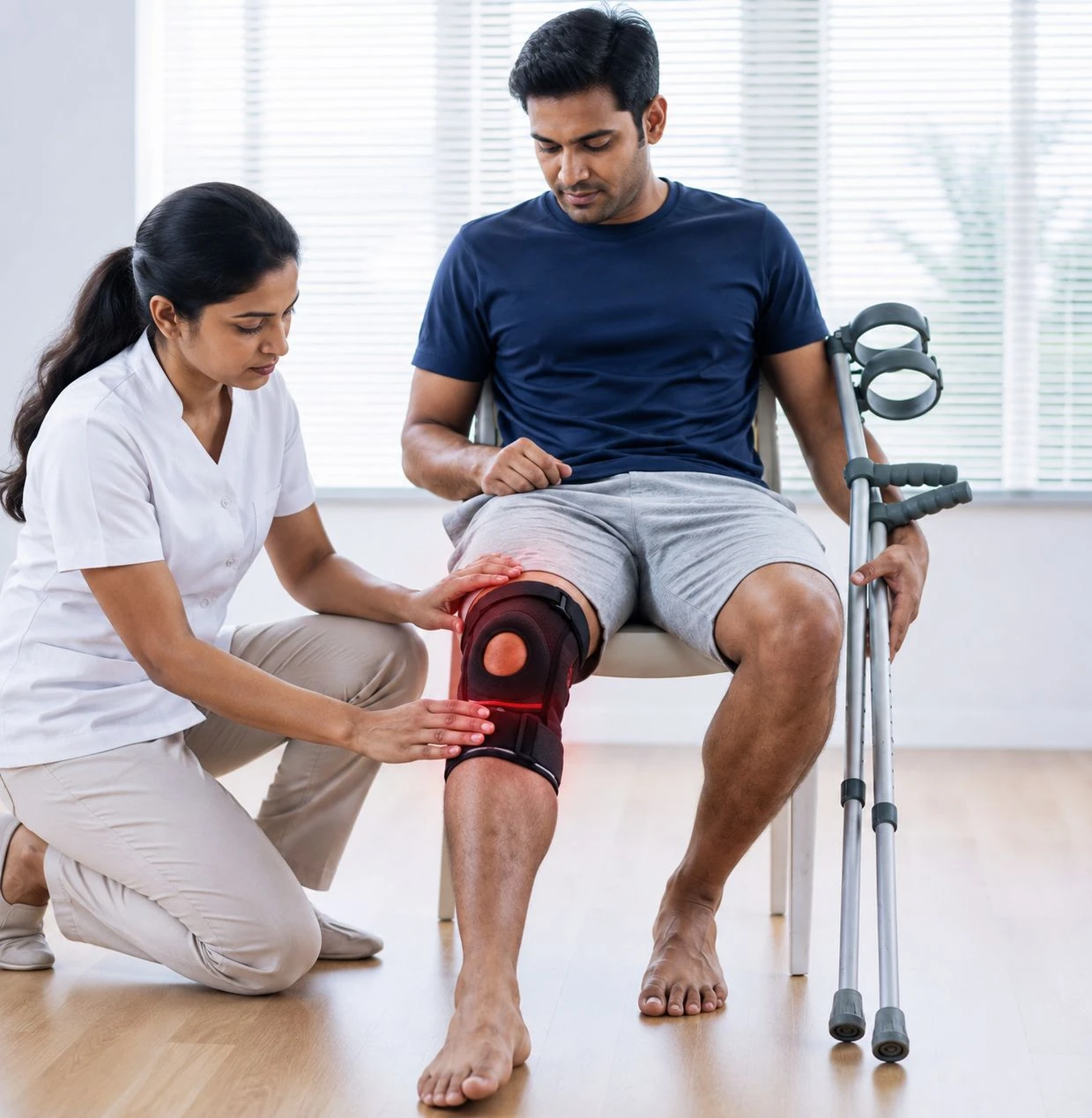
Clinician checking the knee brace of a seated patient, with crutches beside him

Is Surgery Necessary for Every Meniscal Tear?

No.

One of the most common misconceptions Dr. Kiran encounters is that every meniscal tear requires surgery.

Many small tears can improve with:

The decision depends on factors such as:

Regenerative treatments may support healing in selected patients.

In selected patients, regenerative treatments such as ACP (Autologous Conditioned Plasma) and other biologic therapies may be considered to support healing and recovery.

These treatments are typically used as an adjunct in carefully selected cases and are not appropriate for every type of meniscal tear.

When symptoms persist despite conservative treatment, surgery may become the best option.

●WATCH ON YOUTUBE

Does Every Meniscal Tear Need Surgery?

Dr. Kiran Reddy Chennuri · Kindle Clinics

When Does Dr. Kiran Recommend Meniscus Repair Surgery?

Dr. Kiran may recommend Meniscus Repair Surgery in Hyderabad when:

Repairable tear location

The tear is located in a repairable area

Repeated locking

The knee repeatedly locks

Pain in daily life

Pain affects daily activities

Failed conservative treatment

Conservative treatment has failed

Return to sports

The patient wishes to return to sports

Long-term joint health

Preserving knee function is important for long-term joint health

Whenever possible, his goal is to repair the meniscus rather than remove it. Preserving the natural meniscus helps maintain knee function and may reduce the risk of future arthritis.

What Happens During
Meniscus Repair Surgery?

Modern Meniscus Repair Surgery in Hyderabad is usually performed using arthroscopy.

Arthroscopy is a minimally invasive technique that uses small incisions and a tiny camera to view the inside of the knee.

●WATCH THE PROCEDURE

Inside Arthroscopic Meniscus Repair

Dr. Kiran Reddy Chennuri · Kindle Clinics

During the procedure:

1

Small incisions are made around the knee.

2

An arthroscope is inserted to examine the joint.

3

Special instruments are used to repair the torn meniscus.

4

The repaired tissue is secured to encourage healing.

●WATCH THE PROCEDURE

Inside Arthroscopic Meniscus Repair

Dr. Kiran Reddy Chennuri · Kindle Clinics

All-Inside Repair Techniques

Whenever possible, Dr. Kiran performs all-inside meniscal repair techniques using specialised arthroscopic devices under direct visualisation. This allows the repair to be performed through small arthroscopic portals without the need for large incisions or opening the joint.

Stimulating Natural Healing

During surgery, the tear site may also be carefully rasped to stimulate local blood supply. In simple terms, this encourages the body’s natural healing response and may improve the chances of successful meniscal healing.

Biologic Augmentation

In selected patients, biologic augmentation techniques may also be used to support and enhance the healing environment around the repaired meniscus.

Because the procedure is minimally invasive, patients generally experience less pain, smaller scars, and faster recovery compared to traditional open surgery.

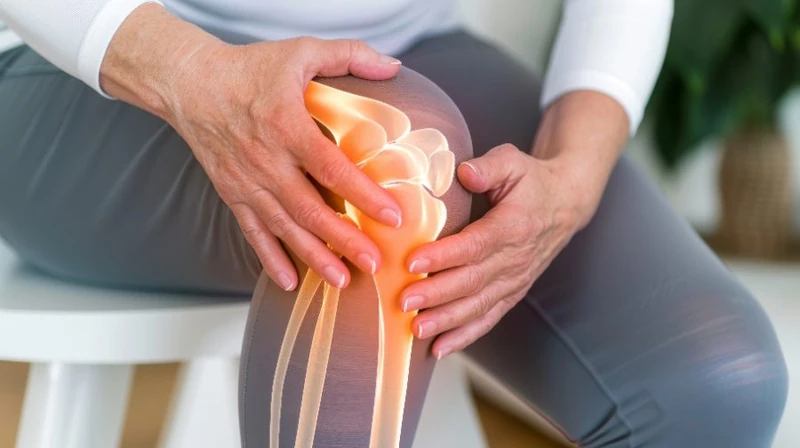
Man holding his painful knee with the knee bones highlighted, beside a close-up of the knee joint

Why Dr. Kiran Prefers Repairing the Meniscus Whenever Possible

Years ago, surgeons frequently removed damaged portions of the meniscus.

Today, research has shown that preserving the meniscus whenever possible provides better long-term protection for the knee.

Dr. Kiran’s treatment philosophy focuses on preserving healthy tissue because the meniscus plays a vital role in:

Repairing the meniscus helps preserve the knee’s natural anatomy and biomechanics. The meniscus plays a critical role in distributing forces across the joint, protecting cartilage, and maintaining stability. Preserving it whenever possible helps the knee function more naturally and may reduce the risk of premature joint wear, cartilage damage, and future arthritis.

This approach has made Meniscus Repair Surgery in Hyderabad an important treatment option for suitable patients.

Man holding his painful knee with the knee bones highlighted, beside a close-up of the knee joint

Recovery After Meniscus Repair Surgery

Recovery is an important part of the success of meniscus repair surgery. While the procedure repairs the torn cartilage, the healing process continues over the following weeks and months.

The exact recovery timeline varies from person to person and depends on factors such as the size and location of the tear, the type of repair performed, overall knee health, and commitment to physiotherapy.

In the initial weeks, patients may need to use crutches and limit weight-bearing activities to protect the repaired meniscus.

Dr. Kiran Reddy Chennuri closely monitors recovery and provides individualized guidance at every stage. His goal is not just to help the meniscus heal but also to ensure the knee regains strength, stability, and confidence.

Many patients are eager to return to sports as quickly as possible. However, Dr. Kiran emphasizes a structured rehabilitation program because returning too soon can place unnecessary stress on the healing meniscus.

Recovery after meniscus repair generally requires a more cautious rehabilitation approach than a simple meniscus trimming procedure because the repaired tissue needs time to heal.

Many patients use crutches during the early recovery phase and gradually progress through physiotherapy over several weeks and months. Return to routine daily activities may occur within a few weeks, while return to running, pivoting sports, and competitive athletics often requires several months of rehabilitation, depending on the tear pattern and repair performed.


As healing progresses, physiotherapy focuses on:

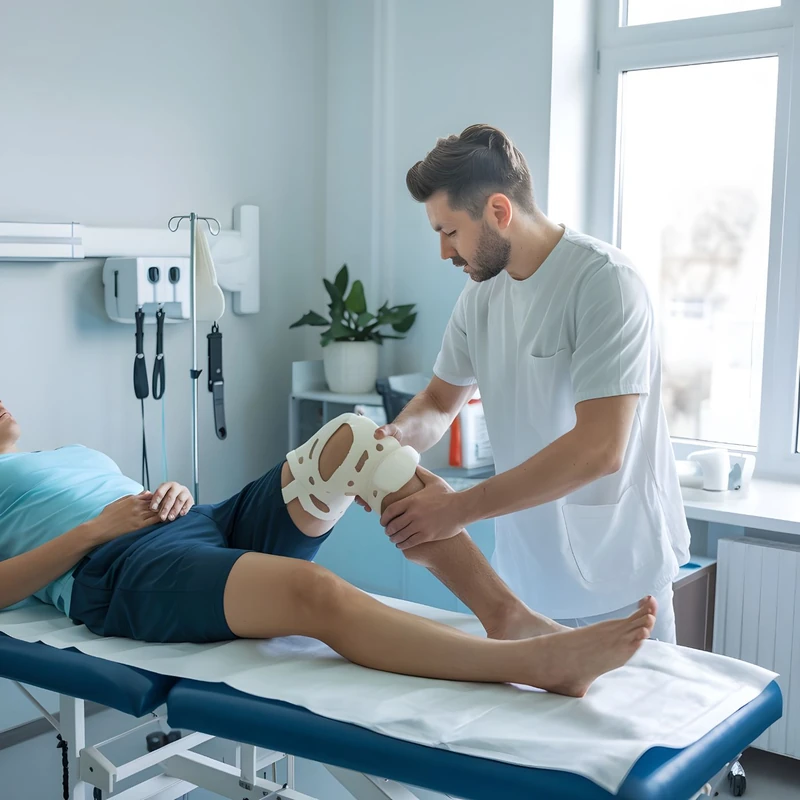
Physiotherapist guiding a patient through knee exercises on a treatment table during rehabilitation

What Results Can Patients Expect?

One of the most common questions patients ask is, “Will my knee feel normal again?” The answer depends on several factors, including the severity of the injury, the condition of the knee joint, and how closely rehabilitation instructions are followed.

Meniscus repair offers several important benefits like:

Preserving the natural meniscus helps maintain the knee’s shock-absorbing function, normal biomechanics, and load distribution. This is one of the most important reasons Dr. Kiran prefers repair whenever possible, as preserving healthy meniscal tissue may help reduce the risk of premature cartilage wear and future arthritis.

Dr. Kiran Reddy Chennuri, MCh Orthopaedics (UK), shoulder and sports medicine surgeon at Kindle Clinics

Dr. Kiran Reddy Chennuri

MCh Orthopaedics (UK) • Sports Medicine & Arthroscopic Knee Surgery

Why Patients Prefer Dr. Kiran Reddy Chennuri for Meniscal Tear Treatment in Hyderabad

Patients seeking treatment for meniscal injuries often want more than a diagnosis. They want to know whether their knee can be preserved, whether surgery is truly necessary, and what their long-term outlook will be.

Dr. Kiran Reddy Chennuri combines advanced arthroscopic expertise with a strong commitment to joint preservation. His goal is not simply to treat the tear but to protect the long-term health of the knee whenever possible.

If knee pain, swelling, locking, or instability is affecting your daily life, consulting an experienced knee specialist can help you understand your options and take the next step toward recovery.

Dr. Kiran Reddy Chennuri holds an MCh in Orthopaedics (UK) and has extensive experience in arthroscopic knee surgery, sports injuries, and meniscal preservation techniques.

He remains committed to evidence-based treatment approaches focused on preserving cartilage, protecting joint health, and delaying degenerative changes whenever possible.

Focus on Preserving the Natural Knee

Dr Kiran tries to repair the meniscus rather than removing it. This approach helps maintain the knee’s natural cushioning and stability.

Expertise in Arthroscopic Knee Surgery

Using advanced arthroscopic techniques, Dr. Kiran performs procedures through small incisions, helping minimize tissue disruption and support smoother recovery.

Individualised Treatment Plans

No two meniscal tears are exactly alike. Dr. Kiran evaluates the patient’s age, activity level, symptoms, imaging findings, and personal goals before recommending treatment.

Emphasis on Non-Surgical Care When Appropriate

All meniscal tears aren’t the same. Dr. Kiran recommends surgery only if required. Not every tear requires surgery.


Comprehensive Care From Diagnosis to Recovery

Treatment does not end after surgery. Dr. Kiran remains actively involved throughout the recovery process, guiding patients through rehabilitation and helping them safely return to their normal lifestyle.

Trusted by Athletes, Working Professionals, and Active Adults

From sports-related injuries to age-related meniscal tears, patients seek Dr. Kiran’s expertise because of his commitment to restoring function while protecting long-term knee health.

Book a Consultation

If knee pain, swelling, locking, catching, or instability is affecting your daily activities or preventing you from participating in sports, an early evaluation can help identify the underlying cause and determine the most appropriate treatment.

At Kindle Clinics, Dr. Kiran Reddy Chennuri carefully evaluates every meniscal injury before recommending treatment. Whether physiotherapy, regenerative therapy, or Meniscus Repair Surgery in Hyderabad is appropriate, the goal remains the same: preserving knee function while protecting long-term joint health.

Take the first step back to a pain-free, stable knee

Share your details and our team will call you back within 24 hours to schedule your consultation.

Prefer to talk now?

Your details stay private — no spam, ever.

Dr. Kiran Reddy Chennuri's Kindle Clinics

Book An Appointment

Dr. Kiran Reddy Chennuri's Kindle Clinics

Contact Us